Stepping out of the shower, damp hair draped over your shoulders, have you ever considered the impact your drying method has on your precious strands? Many of us instinctively reach for a standard bath towel, unaware that this everyday habit could be contributing to frizz, breakage, and dullness. But what if there was a simpler, gentler way to dry your hair? Enter the Cotton Hair Towel – a haircare game-changer designed to protect your locks and enhance their natural beauty. This comprehensive guide will explore why a cotton hair towel might be the missing piece in your routine, helping you choose the best one and master its use for healthier, happier hair.
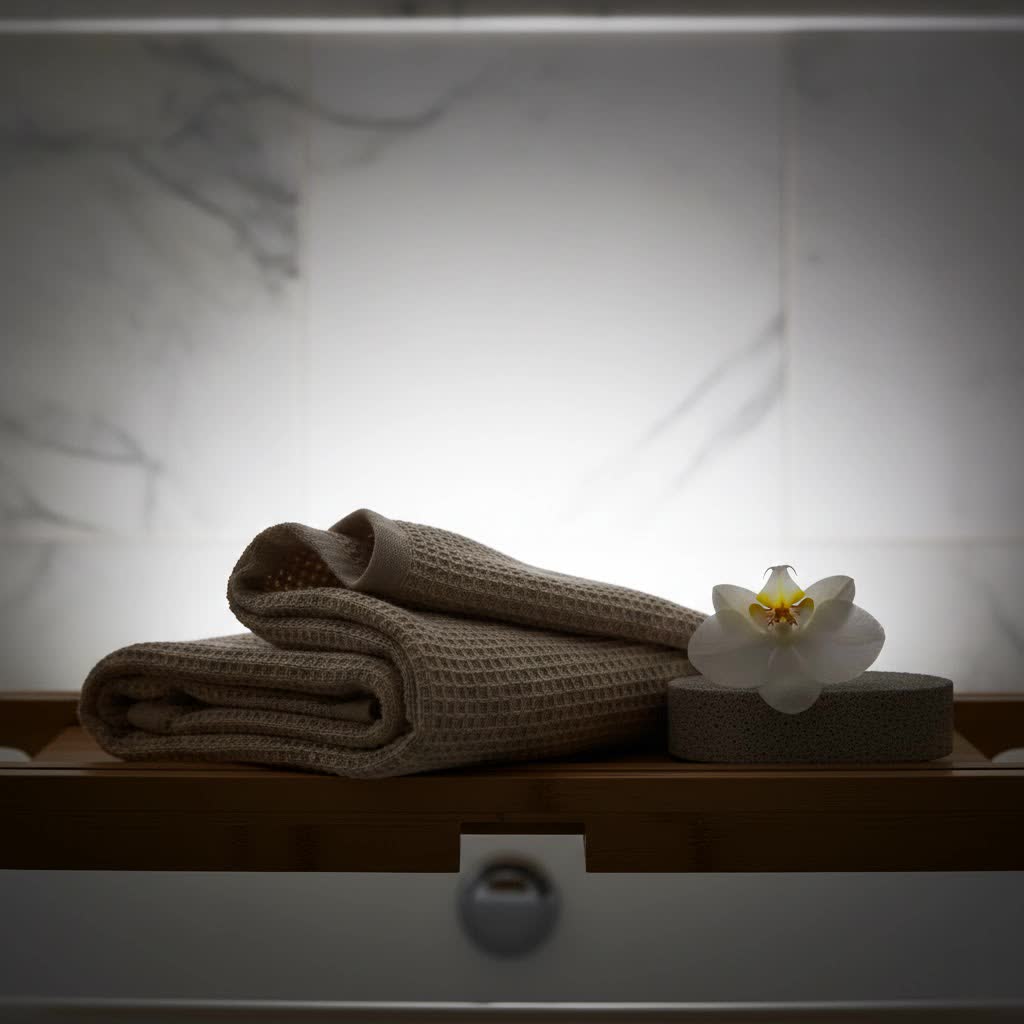
What is a Hair Towel?
A hair towel is a specialized drying tool, often shaped as a wrap or turban, meticulously designed to gently absorb excess water from your hair after washing. Unlike traditional, bulky bath towels, which can be heavy and abrasive, hair towels are crafted from softer, often lighter materials. They aim to minimize friction, reduce drying time, and prevent the damage commonly associated with vigorous towel-drying or excessive heat styling. For anyone seeking to protect their hair from frizz and breakage, switching to a dedicated hair towel is a fundamental step towards a healthier haircare routine.
Choosing a hair towel over a regular bath towel offers significant benefits. Standard terry cloth towels have large, coarse loops that can snag and pull at delicate wet hair, roughing up the cuticles and leading to frizz and split ends. These heavy towels can also create tension on your scalp and neck. Hair towels, on the other hand, provide a smooth, gentle surface that wicks away moisture efficiently without the need for rubbing, thus preserving your hair’s natural integrity and reducing drying time.
Popular Types of Hair Towels
The market offers a variety of hair towel materials, each with unique properties. Understanding these differences is key to selecting the perfect match for your hair type and needs.
Cotton Hair Towels
Cotton hair towels are beloved for their natural softness and significant absorbency. Made from natural plant fibers, cotton is breathable and gentle, making it a comfortable choice for many.
- Advantages:
- Natural and soft: Cotton’s smooth texture minimizes friction and reduces the likelihood of hair breakage and split ends, especially beneficial for fragile or damaged hair.
- Highly absorbent: Quality cotton efficiently wicks away moisture, speeding up the drying process.
- Eco-friendly: As a natural, biodegradable material, organic cotton options are a sustainable choice.
- Comfortable: Offers a familiar, soft feel that is less harsh than a standard bath towel.
- Disadvantages:
- Slower drying: While absorbent, cotton typically dries hair slower than microfiber.
- Microscopic roughness: Though soft to the touch, cotton fibers can be microscopically rough, potentially causing some friction.
- Hygral fatigue risk: For very porous or curly hair, cotton might absorb too much moisture, including natural oils, potentially leading to dryness or hygral fatigue over time.
- Lint: Traditional cotton towels can sometimes shed lint onto hair.
|
Our Picks for the Best Hair Towel in 2026
As an Amazon Associate I earn from qualifying purchases.
|
||
| Num | Product | Action |
|---|---|---|
| 1 | Hicober Microfiber Hair Towel Wrap, Fast Drying Hair Towels for Women, Soft Lightweight Quick Dry Turban for Curly & Long Hair–3 Pack(Blue/Grey/Pink) |

|
| 2 | BEoffer 2 Pack Microfiber Hair Towel - 41 x 24 inches Super Soft, Absorbent, Fast Drying Without Frizz Hair Towel Wrap for Women Long, Thick, Curly Hair - Hair Turbans with Elastic Strap |
|
| 3 | HOMEXCEL 5 Pack Microfiber Hair Towels - 40 x 20 inches Super Soft, Fast Drying Turbans for Long, Thick, Curly Hair - Anti Frizz Wrap with Elastic Strap |
|
| 4 | 2 Pack Microfiber Hair Towel Wrap for Women, Anti Frizz Quick Drying Hair Turban for All Hair Style, Absorbent and Lightweight (Beige) |
|
| 5 | Kitsch XL Microfiber Hair Towel Wrap for Women - Microfiber Towel, Super Absorbent, Quick Dry, Anti-Frizz - for Long & Short Hairs, Turbans for Women |
|
| 6 | 2 Packs Large Microfiber Hair Towels for Women, Super Absorbent & Quick Dry Hair Towel Wrap for Curly Hair Long & Short Hair- Anti-Frizz Hair Turbans for Wet Hair - 27.5''*39.4'' |
|
| 7 | Hair Towel Wrap for Women, Microfiber Towels for Hair with Elastic Band, Large 24 x 42 Inch Hair Plopping Wrap for Curls, Quick Drying Towel Hair Wraps for Women for Home Gym Travel Use |
|
| 8 | Super Absorbent Hair Towel Wrap for Wet Hair, 2026 New Soft Bow Tie Wet Hair Towels Wrap for Women Accessories,Microfiber Hair Towel Wrap Women Quick-Drying Hair Towels (Blue) |
|
| 9 | 2 Pack Microfiber Hair Towel Wrap,Hair Drying Towel with Button, Hair Towel Turban,Quick Dry,Anti-frizz,Absorbent Head Towel (Pink&Beige) |
|
| 10 | 2PCS Ultra Absorbent Hair Quick Drying Towel, 2026 New Microfiber Hair Towel, Soft Bow Tie Wet Hair Towels Wrap for Women Girls (Rainbow Mix) |
|
Microfiber Hair Towels
Microfiber towels are composed of ultra-fine synthetic threads, tightly woven to create a highly effective drying material.
- Advantages:
- Exceptional absorbency and fast-drying: Can hold several times its weight in water, significantly cutting down drying time.
- Reduced friction and frizz: The smooth, fine fibers create minimal friction, protecting hair cuticles and leading to less frizz and breakage.
- Lightweight: Often lighter than cotton, reducing strain on the neck.
- Disadvantages:
- Synthetic material: Not biodegradable, and some may introduce microplastic particles into the environment.
- Can cause static: Some microfiber towels may generate static electricity.
- Quality varies: Not all microfiber is created equal; lower quality options may be less effective or durable.
Bamboo Hair Towels
Bamboo fiber towels are gaining popularity for their luxurious feel and sustainable properties.
- Advantages:
- Eco-friendly: Made from a fast-growing, renewable resource.
- Naturally antibacterial: Bamboo possesses inherent antimicrobial properties, which can help keep the towel fresh.
- Ultra-soft and highly absorbent: Offers a silky-smooth feel and excellent moisture-wicking capabilities.
- Disadvantages:
- Higher price point: Generally more expensive than cotton or microfiber.
- Care: May require specific washing instructions to maintain its integrity.
Silk Hair Towels
Silk hair towels or wraps are a luxury option, prized for their incredibly smooth surface.
- Advantages:
- Minimizes friction: The ultimate material for reducing hair friction, preventing tangles, frizz, and breakage.
- Preserves moisture: Helps hair retain its natural oils, beneficial for dry or delicate hair.
- Great for sensitive hair: Ideal for those with fragile, curly, or chemically treated hair.
- Disadvantages:
- Low absorbency: Not designed for fast drying; typically used to protect partially dried hair or for “plopping” curly hair.
- Very high cost: Silk is significantly more expensive than other materials.
- Delicate care: Requires careful hand washing or dry cleaning.
Comparison Table: Cotton vs. Other Popular Hair Towel Materials
| Material | Absorbency | Durability | Price | Advantages | Disadvantages |
|---|---|---|---|---|---|
| Cotton | High | Good | Low-Medium | Natural, soft, breathable, generally eco-friendly | Slower drying than microfiber, can cause some friction, lint |
| Microfiber | Very High | Good | Medium | Fast-drying, reduces frizz, very absorbent, lightweight | Synthetic, can cause static, quality varies |
| Bamboo | Very High | Good | High | Eco-friendly, naturally antibacterial, ultra-soft | Higher price point |
| Silk | Low | Moderate | Very High | Minimizes friction, preserves moisture, gentle | Low absorbency, very expensive, delicate care |
How to Choose the Right Cotton Hair Towel (Buying Guide)
Selecting the perfect cotton hair towel can significantly improve your hair health. Consider these factors to make an informed choice:
Determine Your Hair Type
Your hair’s unique characteristics should guide your selection.
- Fine or Thin Hair: Look for lightweight, soft cotton towels that won’t weigh down your delicate strands or cause excessive pulling.
- Thick or Coarse Hair: Opt for a larger, highly absorbent cotton towel that can comfortably wrap all your hair and efficiently wick away moisture.
- Curly or Wavy Hair: While microfiber is often recommended for curls to reduce frizz, a soft, high-quality cotton towel can also be a good choice, especially for “plopping.” Ensure it’s gentle to avoid disrupting curl patterns.
- Damaged or Chemically Treated Hair: Prioritize the softest cotton options, like those made from organic cotton or jersey knit, to minimize friction and prevent further damage.
Assess Material Quality
Not all cotton is created equal. High-quality cotton, such as Turkish cotton or organic cotton, will offer superior softness, absorbency, and durability. Look for descriptions that emphasize a smooth, tight weave rather than a coarse, loose one, as this directly impacts how gently the towel interacts with your hair cuticles.
Consider Size and Weight
The right size ensures full coverage without unnecessary bulk.
- For shorter or fine hair: A smaller, lighter towel or turban will suffice.
- For long or thick hair: A larger wrap-style towel is ideal to ensure all your hair is contained and dries evenly without straining your neck. Lightweight cotton options are always preferable to prevent excessive tension on the roots.
Look for Practical Features
Many hair towels come with features designed for convenience.
- Closure mechanism: A secure button, elastic loop, or twist-and-tuck design can keep the towel firmly in place, allowing you to multitask while your hair dries.
- Turban or wrap style: These designs are often more comfortable and effective than simply tying a regular towel.
Read User Reviews
Always check reviews from other users, especially those with similar hair types. Their experiences can provide valuable insights into a towel’s real-world performance regarding absorbency, softness, durability, and how well it reduces frizz.
How to Use and Care for Your Cotton Hair Towel Properly
Even the best cotton hair towel needs proper usage and care to deliver optimal results and maintain its lifespan.
How to Use Your Hair Towel
The key to gentle hair drying is technique.
- Gently blot, don’t rub: After washing, gently squeeze out excess water from your hair with your hands. Instead of rubbing your hair vigorously with the towel, gently blot and press it against your strands. This action allows the cotton to absorb moisture without causing friction or roughing up the cuticles.
- Proper wrapping technique:
- Bend at your waist, flipping your hair forward.
- Place the wide end of the towel at the nape of your neck, ensuring all hair is inside the towel.
- Twist the towel firmly but not too tightly around your hair.
- Flip the twisted section back over your head and secure it with a button, loop, or by tucking it into the wrap. Avoid excessive tension on your hair follicles.
- Allow hair to damp-dry: Leave the towel on for 15-30 minutes, or until your hair feels damp rather than dripping wet. This pre-drying reduces the need for heat styling.
How to Wash and Care for Your Hair Towel
Proper washing and drying ensure your towel remains effective, soft, and hygienic.
- Wash separately: Always wash your cotton hair towels separately from other laundry, especially items with zippers or hooks, which can snag the fabric.
- Use warm water and mild detergent: Warm water is generally effective for cleaning cotton. Use a gentle, natural detergent, and avoid harsh chemical whiteners or bleach, which can degrade the cotton fibers and affect absorbency.
- Skip fabric softeners: Fabric softeners can leave a residue on towels that reduces their absorbency. For cotton, natural alternatives like white vinegar can help maintain softness without clogging fibers.
- Tumble dry low or air dry: High heat can damage cotton fibers over time. Tumble dry on a low setting or, ideally, air dry your towels. Air drying is more energy-efficient and extends the towel’s life, preventing mold and unpleasant odors.
- Washing frequency: It’s recommended to wash your hair towel after every 2-3 uses to prevent product buildup and maintain hygiene.
Top Cotton Hair Towels for Healthy Hair
While specific product names can vary, the best cotton hair towels share several key characteristics that make them stand out in the market. These towels are designed to provide a superior drying experience, promoting healthier, shinier hair.
Look for cotton hair towels crafted from premium, long-staple cotton or organic cotton, known for their exceptional softness and absorbency. Brands that prioritize a waffle weave or a tight, smooth jersey knit often offer a gentler touch compared to standard terry cloth. These weaves help to minimize friction against the hair cuticle, reducing frizz and breakage.
The most favored cotton hair towels typically feature a secure turban or wrap design with a reliable button or elastic loop closure. This design allows for a hands-free, comfortable experience, keeping the towel in place as your hair dries. They are often lightweight, preventing unnecessary strain on your neck while still being substantial enough to absorb significant moisture from even thick or long hair. High-quality cotton towels are also celebrated for their durability, retaining their softness and absorbent properties through countless washes when cared for correctly. When choosing, seek out these characteristics to find a cotton hair towel that feels luxurious and delivers consistent, gentle drying performance.
Conclusion
Embracing a cotton hair towel in your routine is a simple yet impactful step towards healthier, happier hair. By swapping your rough bath towel for a soft, absorbent cotton alternative, you actively reduce friction, minimize frizz, and protect your delicate strands from damage. From understanding the different materials to selecting the ideal towel for your hair type and mastering its care, you now have the knowledge to transform your hair drying experience. Choosing the right tools is an investment in your hair’s long-term health and vitality.
Are you ready to give your hair the gentle care it deserves and unlock its full potential?
Frequently Asked Questions
Is a cotton hair towel better than a regular cotton bath towel?
Yes, a dedicated cotton hair towel is generally better than a regular cotton bath towel for your hair. Hair towels are often made from finer, smoother cotton weaves or designed specifically to be lighter and less abrasive than the coarse loops of a typical bath towel, significantly reducing friction and breakage.
Can I use a cotton hair towel for curly hair?
Absolutely! Many individuals with curly hair find cotton hair towels beneficial for “plopping,” a technique where hair is scrunched into the towel to encourage curl formation while gently absorbing excess water. While microfiber is often popular for curls, soft cotton can also effectively reduce frizz without stripping natural oils.
How often should I wash my cotton hair towel?
It is recommended to wash your cotton hair towel after every 2-3 uses. Regular washing prevents the buildup of hair products, oils, and bacteria, ensuring the towel remains hygienic and maintains its optimal absorbency and softness.
